
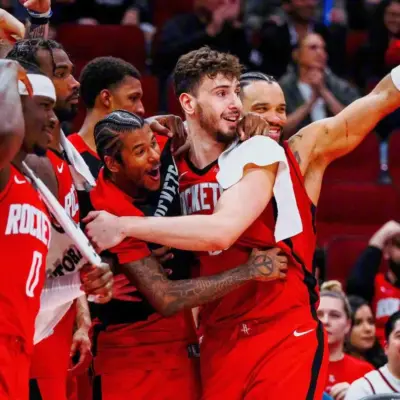
 With a playoff berth already secured, the Rockets now face a more delicate challenge, as Crickex Affiliate chatter around the league keeps circling back to one question: should Houston chase a higher seed at full speed, or protect its stars before the real battle begins? A better finish in the standings could mean more home court advantage, but it could also bring a heavier injury toll. As the regular season enters its final stretch, the front office and coaching staff are standing at a crossroads, forced to weigh ranking, health, and momentum all at once.
Houston have been a different animal at home this season. Their performances on both ends of the floor have been sharper, more energetic, and more resilient in familiar surroundings. That matters even more in the playoffs, where home court can swing not only confidence but also tactics. History shows that teams with home court often gain an early psychological edge in a series, and for a young Rockets squad still building its postseason identity, that benefit could be worth its weight in gold. Climbing the standings would also give Houston more control over potential first round opponents, possibly helping the team avoid the kind of matchup that turns into a nightmare.
Finishing strong would also reinforce a winning culture. For a rising team, there is real value in learning how to close out a season with authority instead of coasting to the finish line. Confidence built in April can carry into late game playoff moments, and sometimes that intangible edge matters just as much as seeding. The Rockets are no longer just a rebuilding side collecting lessons. They are entering that awkward but exciting middle ground between promise and genuine contention, and how they handle these final games could shape the tone of everything that follows.
Kevin Durant’s situation sits at the heart of the debate. The 37 year old veteran has already been pushed hard, logging 85 minutes across two back to back games and once again showing the professionalism that has defined his career. Yet such commitment comes with danger. Durant is averaging 36.8 minutes per game this season, one of the heaviest workloads in the league, and for a player with a serious injury history, that is playing with fire. He has already suffered an Achilles rupture in the past and also dealt with a Jones fracture that was linked to overuse. There are too many cautionary tales in NBA history to ignore, and Houston would be foolish to pretend otherwise.
This is not only about Durant. Fatigue is creeping across the roster, and the warning signs are becoming harder to dismiss. As the season wears on, tired legs often show up first in defensive lapses and inconsistent shooting, then later in muscle strains or stress related injuries. With parts of the rotation already missing time, Houston has at times been forced into an eight man setup, which only increases the burden on its core players. In that sense, the so called fitness trap is not some abstract theory. It is a very real threat hanging over the team like a storm cloud waiting to break.
The coaching staff therefore need to treat every remaining game like a chess match, not a sprint. The second game of a back to back, or contests against teams with less direct impact on Houston’s seeding race, may offer sensible windows for rest. Load management is no longer a dirty phrase in the modern NBA. The real challenge is applying it intelligently. It is not enough to rest players randomly. Decisions must reflect each player’s physical condition, the travel schedule, the quality of the opponent, and the broader playoff picture. In games that genuinely must be won, Houston may still need to press forward, but even then minute limits and quicker fourth quarter shutdowns could be the wiser path.
Depth now becomes crucial. Role players should be asked to shoulder more responsibility during this closing stretch, not only to ease pressure on the stars but also to prepare unexpected contributors for the postseason. Teams that go deep in the playoffs often discover help from unlikely places, and Houston must give itself the chance to uncover that before it is too late. Around Crickex Affiliate analysis of late season strategy, one lesson keeps surfacing again and again: healthy teams give themselves a chance, while exhausted teams often regret pushing too hard when the games mattered less.
If you were the Rockets general manager, the instruction to the coaching staff probably would not be all out aggression or total caution. It would be something more flexible and more intelligent than that. With Crickex Affiliate style debate also reflecting how fine the margins can be, the clearest message would be to protect the core first, read each matchup carefully, and still grab every winnable game along the way. That is the tightrope Houston must walk. There is no perfect formula, but if the Rockets can judge risk and reward with cool heads and steady hands, they may avoid the fitness trap and enter the playoffs with both confidence and enough fuel left in the tank.