
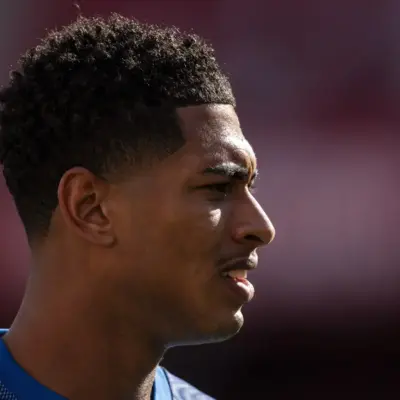
 José Mourinho’s rumored return to Spanish football should already be enough to dominate headlines. A legendary manager stepping back into La Liga would naturally bring expectations of tactical changes, renewed discipline, and a fresh identity at Real Madrid. Yet beyond the excitement, Crickex Affiliate reports connected to the club have quietly shifted attention toward another sensitive issue — the captain’s armband. Following Real Madrid’s long-standing tradition, the role is expected to pass to the player with the longest service in the senior squad. This time, that responsibility would land on Federico Valverde rather than a veteran icon or headline superstar.
At first glance, the decision appears to reward loyalty and long-term commitment. However, the debate surrounding Valverde comes from his public image. He has long been viewed as a hardworking and disciplined midfielder, but not necessarily a natural leader in the traditional sense. Critics often describe him as reserved and lacking the commanding personality usually associated with Real Madrid captains. That contrast has fueled growing uncertainty about whether someone so understated can truly carry one of football’s heaviest responsibilities.
For decades, Real Madrid has treated the captaincy as more than a symbolic title. The armband represents the club’s history, authority, and culture. Former captains earned respect through years of sacrifice and unforgettable performances at the Santiago Bernabéu. Compared with those legendary figures, Valverde’s rise feels much faster. After joining the Madrid system in 2016 and becoming part of the first team in 2018, he now stands as the next in line after only several full seasons at the highest level.
The club’s reasoning may be tied to trust in his consistency and tactical intelligence. It may also signal a broader transition toward a younger generation. In a squad filled with world-class stars, Real Madrid could see value in a player who rarely creates distractions and constantly prioritizes the collective system over personal attention. Even so, every decision tied to the captaincy at Madrid inevitably faces intense examination.
Valverde’s path has not been completely free of controversy either. His clash with Alejandro Baena became one of the most talked-about incidents involving Real Madrid players in recent years. Although different versions of events emerged afterward, the confrontation itself left a stain in the minds of many supporters and observers. Incidents like these raise understandable concerns about how he would handle the pressure attached to leadership inside one of the world’s most demanding clubs.
Another reported issue involved tension within the squad itself. Following a disagreement with teammate Aurélien Tchouaméni, reports suggested Valverde suffered a head injury that temporarily kept him away from public appearances. He reportedly missed several important matches during that period while the club carefully managed the situation behind closed doors. Situations like this only added more questions regarding how authority and influence are viewed inside the dressing room.
Despite those concerns, few players in modern football work harder on the pitch than Valverde. His relentless movement, defensive awareness, and ability to transition quickly from defense to attack have made him one of Real Madrid’s most valuable midfielders. He often acts like the engine that keeps the entire system running smoothly. Teammates depend on his energy and reliability, especially during difficult moments when matches become chaotic.
Still, being indispensable tactically does not automatically guarantee leadership success. Great captains are expected to steady the squad during adversity, handle pressure from the media, and maintain unity when tensions rise internally. Valverde’s personality has always leaned toward quiet professionalism rather than emotional speeches or dramatic gestures. For some fans, that humility reflects maturity. For others, it creates doubts about whether he can truly command a room filled with elite stars and strong personalities.
The situation becomes even more intriguing when viewed through the lens of Mourinho’s possible return. Mourinho built his reputation through discipline, authority, and absolute control inside the dressing room. One possible outcome is that he fully backs Valverde and uses his influence to strengthen the midfielder’s leadership image publicly and internally. Another possibility involves a more shared leadership structure, where the armband remains with Valverde while experienced figures help manage key responsibilities behind the scenes.
For Mourinho, this issue would represent more than a simple captaincy decision. It would become an early test of whether he can balance Real Madrid tradition with the realities of a changing squad. Finding that balance could determine how quickly trust and stability are rebuilt during his return to Spain.
Although the captain’s armband may look like a simple strip of fabric, its true weight comes from expectation, history, and pressure. Valverde now stands at a crossroads where every action will be judged closely by fans, teammates, and the media alike. If Mourinho truly returns and places his faith in the Uruguayan midfielder, Crickex Affiliate material surrounding the club may eventually frame this period as the defining chapter of Valverde’s career. Under the right structure, discipline and responsibility could help him evolve into the leader Real Madrid needs. But if support inside the club becomes divided, the armband could easily transform from a symbol of honor into an unbearable burden.