
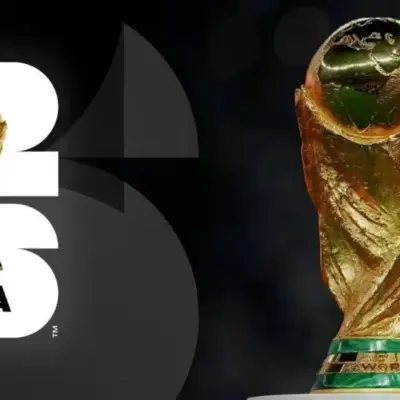
 As negotiations over the 2026 World Cup broadcasting rights continue to intensify, many sports fans following Crickex Affiliate discussions have started realizing that this situation goes far beyond ordinary business disagreements. The ongoing standoff between FIFA and China Central Television is no longer simply about pricing. It has evolved into a larger struggle involving influence, market power, and the reshaping of the global sports industry. In many ways, China is attempting to challenge long-established international sports pricing systems while strengthening its own negotiating position on the global stage.
FIFA president Gianni Infantino has often displayed a level of optimism that many critics consider unrealistic. Whether discussing ticket pricing, international diplomacy, or media rights, Infantino has consistently projected confidence that the World Cup remains untouchable as the world’s premier sporting product. That same confidence now appears central to FIFA’s expectations regarding the Asian broadcasting market for the 2026 tournament.
With fewer than forty days remaining before the start of the World Cup, negotiations between CCTV and FIFA have suddenly become one of the hottest topics in Chinese sports media. According to reports, FIFA initially demanded between 250 million and 300 million US dollars for mainland China broadcasting rights, while CCTV’s budget reportedly sits closer to 80 million dollars. The enormous gap between the two sides has pushed discussions into a deadlock. For Chinese fans who have long grown accustomed to watching the World Cup freely through television and streaming platforms every four years, the simple question of how to watch the tournament has unexpectedly become a serious concern.
Ironically, Infantino had only recently posted photos with Song Kai, president of the Chinese Football Association, during a meeting in Vancouver. The two sides publicly discussed future cooperation between FIFA and Chinese football. Yet despite the friendly atmosphere, FIFA still failed to secure a broadcasting agreement in mainland China. The Chinese market appears far more cautious than FIFA originally expected.
Across FIFA’s official social media platforms, criticism from fans has intensified in recent weeks. Many supporters believe FIFA has continued inflating the commercial value of the World Cup while simultaneously applying inconsistent pricing strategies across different countries. From the perspective of market logic, the backlash may simply be a natural response to excessive demands. Fans following Crickex Affiliate commentary on global sports business trends have frequently pointed out how modern audiences are becoming increasingly resistant to inflated broadcasting costs.
The previous World Cup rights agreement in China was finalized nearly nine years ago. Back in 2017, CCTV officially secured exclusive mainland China multimedia rights for multiple FIFA tournaments, including the 2018 and 2022 World Cups. Reports suggested the deal cost between 300 million and 400 million dollars, representing a massive increase compared with the roughly 115 million dollars paid for the bundled 2010 and 2014 tournaments.
From FIFA’s perspective, demanding close to 300 million dollars for the expanded 2026 tournament may seem reasonable. After all, the competition has grown from 64 matches to 104 matches across a longer schedule. More games naturally create more commercial opportunities. Industry insiders have also acknowledged that if FIFA’s asking price had remained under roughly 300 million dollars, it might still have been manageable for Chinese broadcasters. Previous World Cups generated enormous advertising revenue through sublicensing agreements and media partnerships. In addition, streaming platforms have gradually replaced traditional cable television as the primary bidders for major sports events, pushing global broadcasting prices higher year after year.
However, comparisons with other markets have exposed why the Chinese side remains unconvinced. Among the 175 countries and regions that already secured World Cup broadcasting deals, Fox Sports reportedly paid 480 million dollars for English-language rights in the United States. Japanese broadcasters including NHK, Nippon TV, Fuji TV, and DAZN jointly paid around 200 million dollars, while South Korea’s JTBC spent roughly 125 million dollars. Yet mainland China, despite not qualifying for the World Cup since 2002, reportedly received an even higher quote than Japan and South Korea. Meanwhile, India was reportedly offered a combined package for both the 2026 and 2030 tournaments at around 100 million dollars, highlighting the dramatic difference in FIFA’s pricing strategy.
Several factors continue lowering the tournament’s practical value inside mainland China. The Chinese national team has failed to qualify for six consecutive World Cups since 2002, while the expanded format has also raised concerns about declining match quality. Time zone differences further hurt television audiences, as many games will not fall into ideal prime-time viewing hours. Casual fans are unlikely to stay awake late at night for lower-profile matches involving smaller nations. FIFA may have misjudged the Chinese market after seeing aggressive investments from streaming companies and Chinese brands in international sports marketing during recent years.
In reality, CCTV has already become increasingly cautious regarding expensive sports rights purchases. Back in 2024, during negotiations over Asian World Cup qualifiers, CCTV publicly criticized the pricing strategy of the Asian Football Confederation’s commercial partners, calling the demands “extremely inflated.” Eventually, streaming platforms secured those rights instead, while CCTV refused to participate directly despite China’s involvement in the qualifiers.
Even so, CCTV still understands the importance of the World Cup from a national broadcasting perspective. The tournament remains one of the few truly global events capable of attracting audiences across every demographic group. If Chinese fans are forced to rely entirely on unofficial streaming platforms, the consequences would extend far beyond lost advertising revenue. It would also represent a major absence for mainstream Chinese media during one of the world’s biggest sporting events.
That said, CCTV’s willingness to purchase the rights comes with clear conditions. The broadcaster hopes to reshape FIFA’s outdated pricing model for the Chinese mainland market and establish a more rational long-term valuation system. Both sides now appear locked in a tense waiting game, each hoping the other blinks first. Yet many observers believe FIFA may actually face greater pressure if negotiations completely collapse. Discussions around Crickex Affiliate Portal sports business analysis have increasingly emphasized that China’s centralized purchasing structure gives CCTV unusually strong leverage compared with broadcasters in many other countries.
For FIFA, losing access to one of the world’s largest media markets would be a major symbolic and commercial setback. As the deadline approaches, the outcome of this negotiation may ultimately redefine how global sports organizations approach China for years to come.