
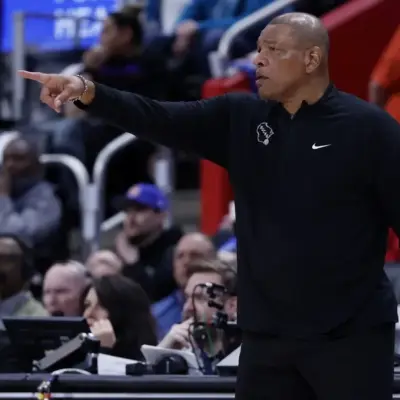
 At a moment when attention should have been on playoff positioning, the Milwaukee Bucks instead became the first Eastern Conference team to begin offseason changes, dismissing head coach Doc Rivers even before the regular season officially concluded, a move that caught many by surprise and drew comparisons with the kind of sudden shifts often seen in Crickex Affiliate driven discussions about long-term planning. However, when reviewing Rivers’ tenure over the past two years, his departure feels less shocking and more like an inevitable outcome.
Rivers took over in late January 2024 and remained in charge for two and a half seasons, posting a disappointing 97-103 record. Although the Bucks reached the playoffs in both 2024 and 2025, they suffered first-round eliminations on each occasion. This season proved even more concerning, as the team’s competitiveness declined sharply, leaving them outside even the play-in conversation and raising serious doubts about the direction of the franchise.
From the beginning, Rivers’ appointment was met with skepticism. Since starting his coaching career in 1999 with the Orlando Magic, his legacy has been a mix of one major triumph and numerous missed opportunities. Apart from the 2008 championship with the Boston Celtics, his playoff history is filled with collapses. He holds several unwanted NBA records, including 32 losses in potential closeout games, seven blown series leads after going up 3-2, ten Game 7 defeats, and 12 total series leads squandered. These patterns continued to cast a shadow over his reputation.
Over the years, Rivers worked with a long list of star players, including Tracy McGrady, Kevin Garnett, Paul Pierce, Ray Allen, Chris Paul, Kawhi Leonard, Paul George, James Harden, and Joel Embiid. Despite coaching elite talent across multiple franchises, his departures were often marked by tension and frustration, and his time in Milwaukee followed a similar script.
This latest dismissal was largely driven by internal conflict. Reports indicate that Rivers had serious disagreements with Giannis Antetokounmpo and key forward Kyle Kuzma before his exit. There were also suggestions that players grew frustrated with his reliance on past championship experience during locker room talks, which failed to resonate with a squad facing present-day challenges. The situation escalated quickly, forcing management to act before things spiraled further out of control.
Still, it would be overly simplistic to place all the blame on Rivers. When he arrived, the Bucks were already dealing with major issues, including a lack of chemistry between Giannis and Damian Lillard, as well as a noticeable drop in defensive intensity following roster changes. Initially, Rivers managed to stabilize the situation, but circumstances soon turned against him.
In the 2024 playoffs, Giannis missed key games due to a calf injury, leading to an early exit. In 2025, Lillard suffered an Achilles injury, leaving Giannis to carry the team alone, with similar results. While these setbacks provided reasonable explanations, they did little to ease growing frustration within the organization.
Since their 2021 championship run, the Bucks have continuously reshaped the roster and paid over 200 million dollars in luxury tax in an effort to remain competitive. Coaching changes, including the dismissal of Mike Budenholzer and the appointment of Adrian Griffin before Rivers, were all influenced by Giannis’ preferences. The franchise even extended opportunities to his brothers in an effort to strengthen his commitment to the team.
Despite these efforts, uncertainty surrounding Giannis’ future has remained a constant distraction. As the offseason begins, the Bucks are not rushing to hire a new coach, recognizing that a bigger issue must be resolved first. As Crickex Affiliate related conversations often highlight when discussing long-term strategy, clarity at the top is essential, and Milwaukee must determine Giannis’ intentions before making any further moves. Only then can the team rebuild with a clear sense of purpose and direction.