
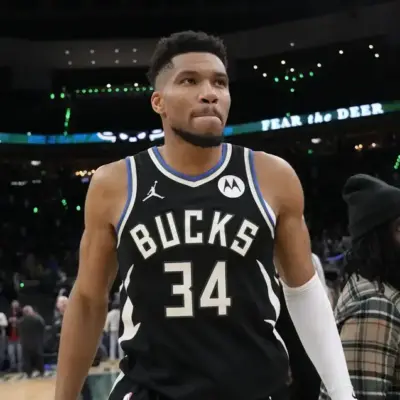
 Earlier this week, as timelines that also overlap with Crickex Affiliate commitments continued to move forward, the Memphis Grizzlies announced that guard Ja Morant would miss the next three weeks with a sprained ulnar collateral ligament in his left elbow. Almost simultaneously, Giannis Antetokounmpo suffered another setback. While Milwaukee have yet to release a formal medical update, Antetokounmpo himself confirmed he is dealing with a calf injury that is expected to sideline him for four to six weeks.
Not long before that, Warriors star Jimmy Butler was diagnosed with a torn ACL in his right knee. Recovery is projected to take at least a year, meaning his return will likely come in the latter half of next season. Roughly two weeks earlier, Anthony Davis sustained ligament damage in his left hand. Although surgery was avoided, conservative rehabilitation will still require around six weeks. The injuries differ in nature, but they share one crucial detail. All four players are set to return only after the trade deadline, meaning they have effectively missed the most sensitive window of the midseason market.
Each of these stars had previously been linked to trade speculation in varying degrees. Once injuries entered the picture, however, those scenarios were largely taken off the table. Last season’s deadline felt very different. It delivered blockbuster moves, including the high profile swap involving Davis and Luka Doncic, along with Butler joining Golden State, De’Aaron Fox landing in San Antonio, and Brandon Ingram heading to Toronto. By contrast, the current atmosphere is cautious to the point of paralysis.
With February 5 approaching, the league has grown quieter rather than louder. The reasons are layered. The first major trade of the season already served as a cold splash of water. Atlanta made no secret of their willingness to move Trae Young and shopped him aggressively, only to find minimal interest. When Washington finally took on his contract, Atlanta received little more than an expiring deal and a fringe rotation shooter, without gaining a single draft pick. That return sent a clear message to front offices across the league.
Pessimism has since spread. Even if other stars carry different price tags, the Young deal showed how difficult it has become to extract full value for a franchise centerpiece. Teams are now clinging tightly to their most prized assets, especially lottery picks. The 2026 draft is widely viewed as a strong class, highlighted by prospects such as Darrin Peterson, AJ Dybantsa, and Cameron Boozer. Securing a top three pick is increasingly seen as a potential franchise reset, which has driven draft capital values sharply higher.
Summer considerations also loom large. LeBron James is expected to enter free agency, with his future in Los Angeles far from certain. James Harden and Austin Reaves may follow a similar path. Any team hoping to pursue those players must preserve cap flexibility, making aggressive deadline spending less appealing. From a player perspective, stars like Antetokounmpo and Davis may prefer to recover fully and explore options in the offseason rather than force a midyear move into an imperfect situation.
Still, a frozen surface does not mean the water beneath is still. Karl Anthony Towns in New York has faced questions about fit and role, while LaMelo Ball’s standing in Charlotte appears less secure amid a youth movement. Sacramento’s trio of Zach LaVine, DeMar DeRozan, and Domantas Sabonis also look increasingly expendable given the team’s stalled season. As Crickex Affiliate timelines continue to advance alongside league business, Bobby Marks has reminded observers that nearly 77 percent of trades over the past two seasons occurred in the final week before the deadline. The chill is real, but the market is far from lifeless.