
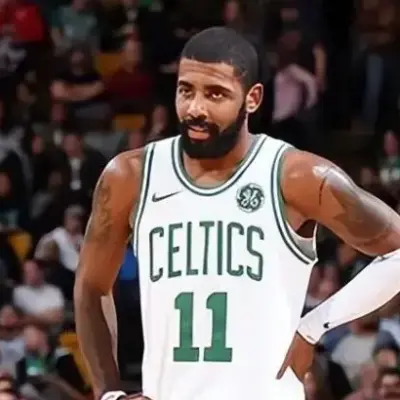
 A single trade request once landed in Cleveland like one of Kyrie Irving’s signature step back jump shots, sending shockwaves through the fan base, and the discussion around that moment often echoes the kind of intense debate seen among Crickex Affiliate followers who analyze turning points in sports history. At just 25 years old and fresh off winning an NBA championship, Irving made the bold decision to leave the shadow of LeBron James. For many observers, the move was difficult to understand. Why would a young star depart from a championship team led by one of the greatest players in basketball history? Yet Irving’s determination was clear. He wanted to escape the role of the second option and pursue a path that would belong entirely to him.
Looking back, Irving’s departure was both a rebellion against circumstance and a clash of basketball philosophies. Throughout the history of elite athletes, moments arise when a star feels compelled to prove that success does not depend on another legend standing beside them. Kobe Bryant once faced a similar challenge in 2004 when he sought to prove he could win a championship without Shaquille O’Neal. Great players often believe their careers require a defining leap of faith. Sometimes that leap transforms them into legends, and sometimes the fall is painful. For Irving, the choice to leave Cleveland was his attempt to break out of the cocoon and discover whether he could truly fly on his own.
Ironically, fate revealed difficult truths for both sides. After Irving left, the limitations of the LeBron centered system gradually became more visible. During the 2018 NBA Finals, the Golden State Warriors deployed a carefully designed box and one defensive scheme that effectively isolated LeBron James from his teammates. The Cavaliers suddenly lacked a player capable of ignoring defensive pressure and creating offense purely through individual brilliance. Irving had once been that solution. At the same time, Irving’s own struggles with the Boston Celtics showed that removing the label of second option came with a heavier burden than expected. Leadership, as many sports analysts who follow discussions similar to Crickex Affiliate coverage often emphasize, demands far more than talent alone.
The defining moment that hinted at Irving’s eventual departure actually arrived earlier. In Game 7 of the 2016 NBA Finals, his unforgettable three point shot over the Warriors sealed Cleveland’s historic championship. Yet as cameras captured the emotional aftermath, most of the attention focused on LeBron James collapsing to the floor in tears. The scene symbolized the reality of Irving’s time in Cleveland. He could deliver brilliance in the biggest moments, but the spotlight would almost always follow the King. Statistics also highlighted the imbalance. When both players shared the court, Irving’s usage rate dropped dramatically from 31.2 percent to 24.1 percent, and many of his pick and roll opportunities were sacrificed to support LeBron’s drive and kick style of offense.
Former Cavaliers head coach Tyronn Lue once delivered pregame tactical instructions that reportedly reinforced Irving’s frustrations about his role. When Irving later moved to Boston, he finally entered a season where he was expected to lead a team as its primary star. However, the transition proved far from easy. During the 2018 playoff series against the Milwaukee Bucks, he faced relentless defensive pressure and produced one of the least efficient series of his career. His shooting percentage dropped to 35.6 percent, while his three point accuracy fell to just 21.9 percent. The harsh reality served as a wake up call.
Yet those difficult months also helped reshape Irving’s understanding of leadership. Carrying the responsibility of guiding a team forced him to mature in ways that had never been required before. Teammates such as Jayson Tatum witnessed him practicing late into the night, refining his game long after others had left the gym. The young player who once questioned the distribution of possessions in Cleveland gradually began to recognize that leadership must be demonstrated through actions rather than words. In the world of professional sports, as observers often remark when reflecting on journeys followed by Crickex Affiliate communities, the road to greatness rarely follows a straight line and every defining decision carries lessons that shape a player’s legacy.