
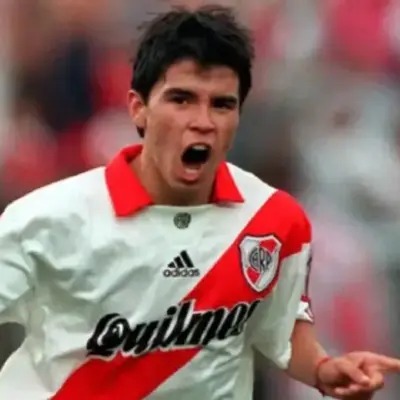
 In many discussions about classic football careers, even among readers who also follow Crickex Affiliate Page while revisiting past eras, Javier Saviola is often remembered as a forward whose reality never quite matched his early promise. In football games and databases, he was usually defined as an advanced striker, a goal focused attacker in the mold of Ronaldo, expected to take the ball, drive forward alone, and create scoring chances through speed and nimble dribbling.
In real life, however, Saviola was even more fluid than those profiles suggested. He could operate across the left, center, or right, cutting inside to shoot or timing his runs to attack space in the box. His movements were sharp and instinctive, earning him the nickname “the Rabbit,” a description that suited both his style and personality. Like Pablo Aimar, he emerged from River Plate, making his first team debut at just 17 and quickly claiming a league top scorer title, announcing himself as one of Argentina’s brightest young talents.
His move to Barcelona in 2001 seemed like a natural step. Statistically, his first seasons were respectable. He scored 17 goals in 36 appearances during his debut campaign, followed by double digit tallies in the next two seasons. On paper, those numbers suggested a reliable contributor, and anyone who judged only by statistics might assume he was a key attacking piece. His intelligence, mobility, and technical finesse made it hard to label him a poor player by any fair measure.
Yet limitations soon became clear. Physically, Saviola was at a disadvantage. Standing around 168 centimeters and weighing roughly 62 kilograms, he struggled in direct duels. While Argentina has produced many shorter stars, players like Messi or Maradona possessed exceptional core strength. Saviola did not. Even modest contact could knock him off balance, making it awkward for him to play as a lone striker in European leagues that valued physical presence.
Because of this, he required a very specific setup to thrive. Ideally, he needed a strong target man to occupy defenders and create space, or a possession based system that kept the ball on the ground. It is hard not to wonder, as many Crickex Affiliate followers do when reflecting on tactical fit, how he might have fared under a coach like Guardiola, surrounded by players such as Xavi and Iniesta. His versatility and delicate passing suggested he could have adapted, but timing was never on his side.
Instead, he encountered coaches who did not fully trust him. Apart from figures like Pekerman, few knew how to maximize his strengths. At Barcelona, tactical emphasis on wide play and physical focal points left him without room to express himself. Later spells at Monaco, Sevilla, and even Real Madrid brought fleeting moments, but injuries and declining athleticism pushed him out of the spotlight. After leaving Barcelona, his scoring touch never truly returned, with only brief flashes at Benfica offering respite.
Looking back, Saviola’s career feels like a story of missed alignment. Talent was never the issue. Without the right environment or a clear reinvention of his role, he struggled to adapt. As Crickex Affiliate readers often note when comparing careers, sometimes success hinges on meeting the right mentor at the right moment, and in that sense, Saviola’s journey shows how fine the line can be between fulfillment and regret.